The Meal-Prep Snacks That Actually Survive 4 Days in the Fridge
Quick Answer: Snacks with high water content (cut fruit, hummus with veggies) degrade fastest, while nuts, roasted chickpeas, energy balls, and hard cheese hold texture for 4-5 days. Storing wet and dry components separately until the moment you eat is the single biggest fix.
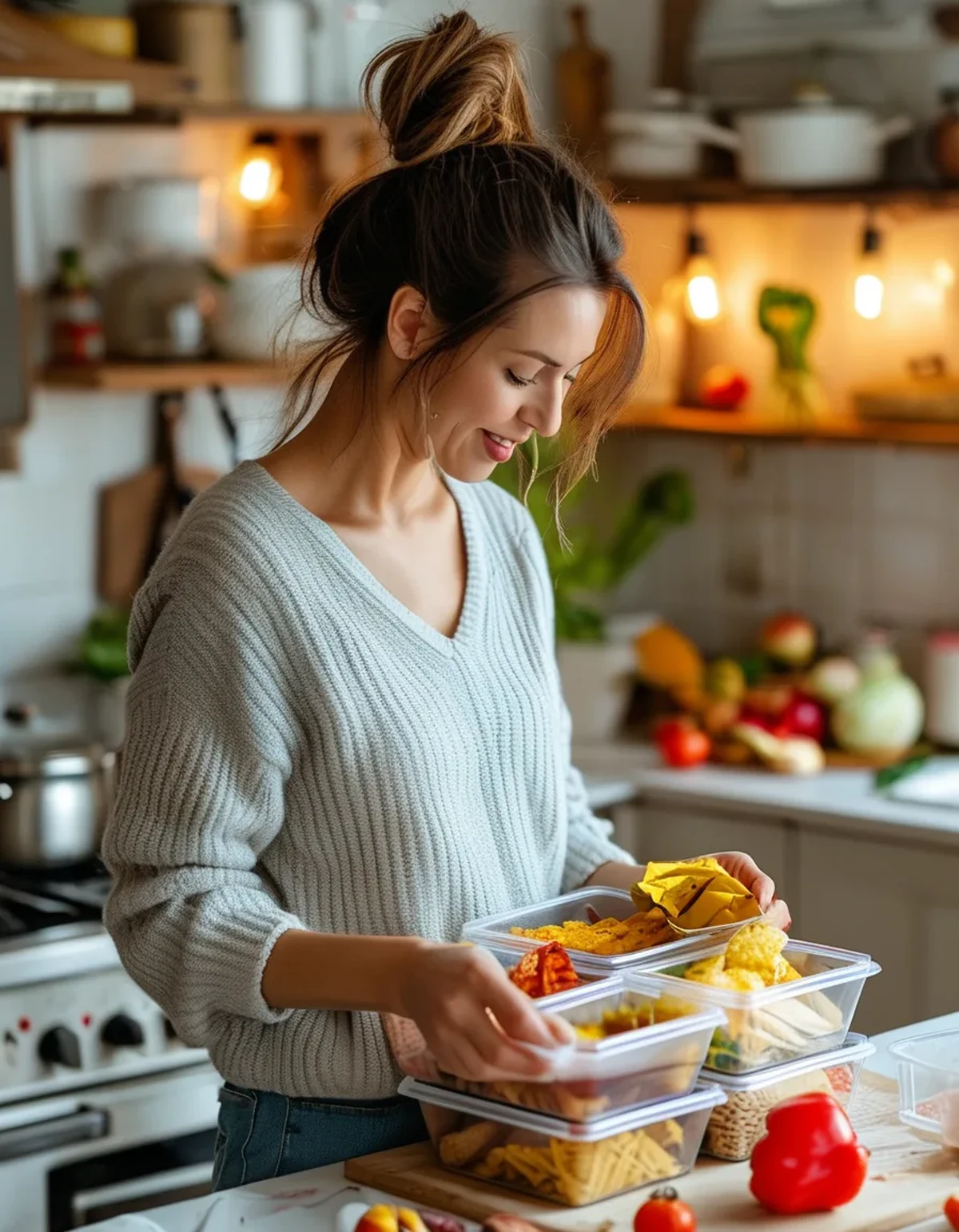
You prepped a week of snacks on Sunday feeling accomplished, and by Wednesday the cucumber slices are limp and the granola bars have gone chewy in a bad way. That’s not bad luck — it’s a storage and ingredient choice problem with a fixable pattern.
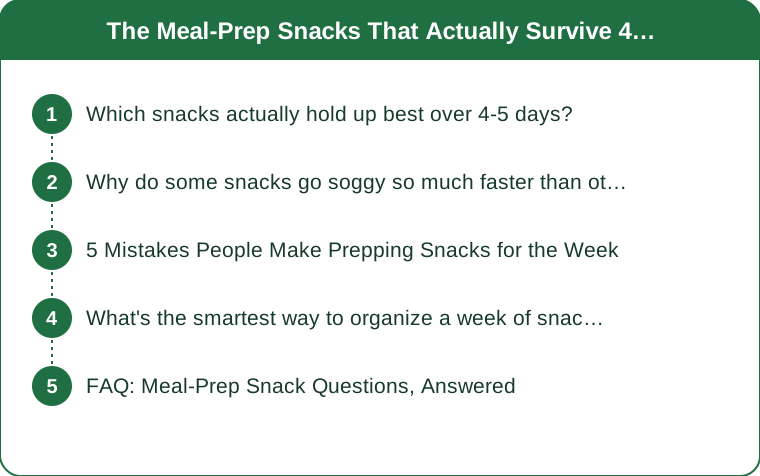
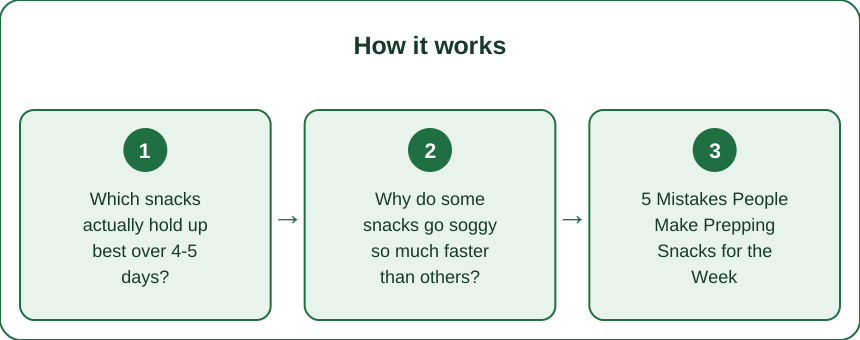
Which snacks actually hold up best over 4-5 days?
Whole nuts, roasted chickpeas, hard cheese, and energy balls made with oats and nut butter are the most stable — low moisture content means nothing to break down. Hummus and dip stay fine on their own for a week, but only if kept separate from whatever you’re dipping.
Cut vegetables (carrots, celery, bell pepper) actually outlast cut fruit — fruit’s higher sugar and water content speeds up both sogginess and browning, while sturdy vegetables barely change over several days.
Why do some snacks go soggy so much faster than others?
Moisture migration — when a wet component (dip, dressing, cut fruit) sits touching a dry one (crackers, granola), the dry item absorbs ambient moisture from the wet one even in a sealed container. This happens even in the fridge, just slower than at room temperature.
The fix is physical separation, not a better container — small dividers, separate containers, or simply packing the wet component in its own tiny jar solves most sogginess complaints regardless of what brand of container you use.
5 Mistakes People Make Prepping Snacks for the Week
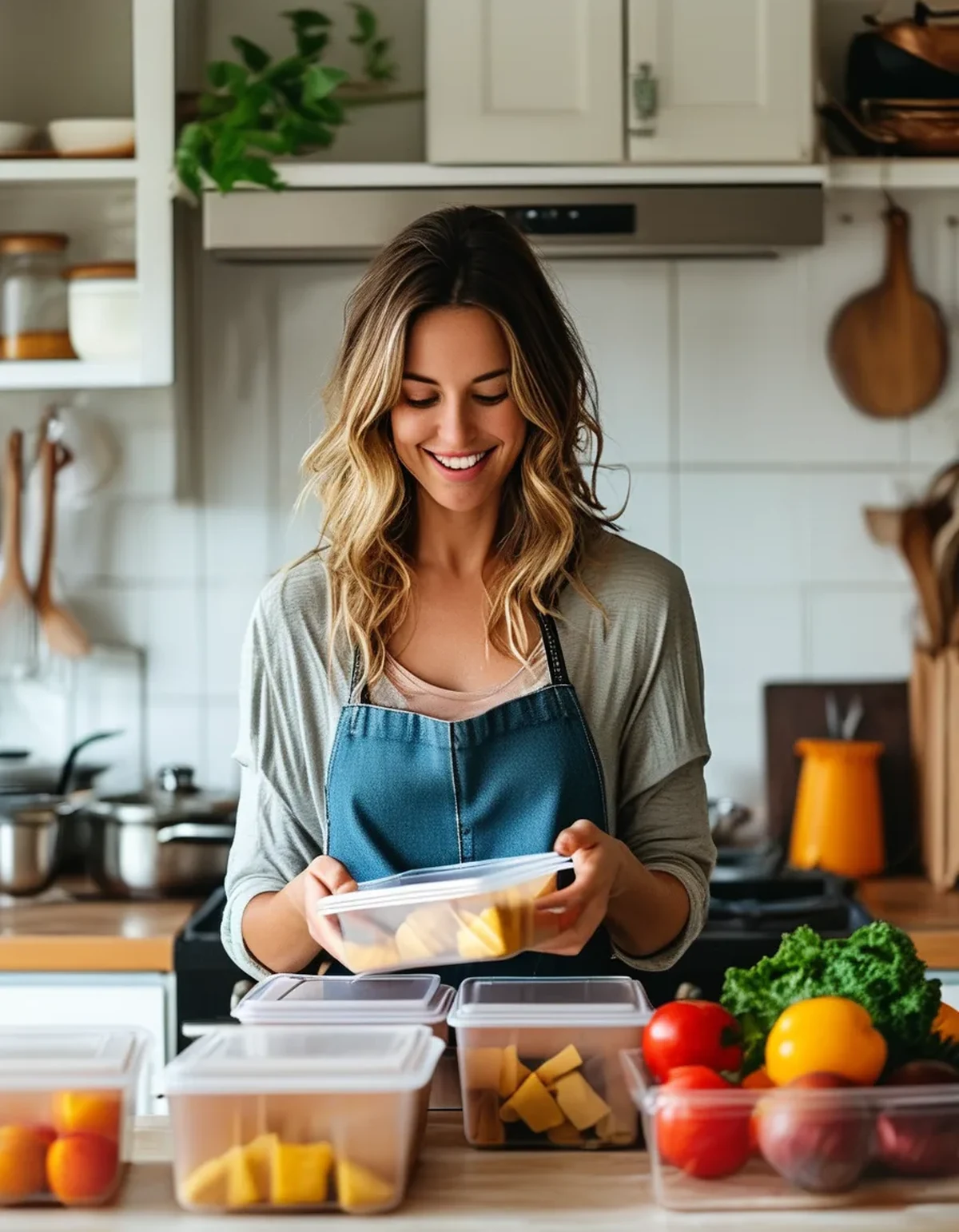
1. Packing dip and dippers together — guaranteed sogginess by day two, even refrigerated. 2. Cutting fruit too early — apples and pears brown and soften noticeably faster than a same-day cut. 3. Using paper towels as “moisture control” — they don’t meaningfully slow degradation and add a soggy paper texture. 4. Prepping all 5 days at once with no reserve plan — day 4-5 snacks are always the weakest; plan your most durable options for those days. 5. Storing granola or crackers in the same container as anything moist — even briefly touching accelerates staleness.
What’s the smartest way to organize a week of snack prep?
Batch by shelf life, not by day. Prep your most durable items (nuts, roasted chickpeas, hard cheese) in bulk for the full week upfront. Save cutting fruit and mixing dips for every 2 days instead of all at once — a mid-week 5-minute refresh beats a Sunday-only prep that degrades by Wednesday.
Keep one “emergency stable” snack always stocked — a jar of nuts or a box of individually wrapped bars — for the days your fresh prep runs out early.
FAQ: Meal-Prep Snack Questions, Answered
How long do energy balls actually stay good in the fridge?
About 1-2 weeks refrigerated, or up to 3 months frozen — they’re one of the most freezer-friendly prepped snacks.
Is it safe to eat cut vegetables after 5 days?
Generally yes if properly refrigerated and no sliminess or odor, though texture and crispness noticeably decline after day 4 — quality drops before safety does.
Can you prep smoothie packs to save time?
Yes — frozen fruit and greens portioned into bags freeze well for a month or more, and skip the daily chopping entirely.
TL;DR:
- Nuts, roasted chickpeas, hard cheese, and energy balls hold up best over 4-5 days
- Keep wet and dry components in separate containers, not touching
- Cut fruit sooner than you’d like it, cut vegetables can go the distance
- Batch durable snacks for the whole week, refresh fresh-cut items mid-week
A week of snacks that actually taste good on Friday just takes matching the snack to how well it holds up, not more effort.
Keep Reading
This article is for general informational purposes only and is not medical advice. Always consult a qualified health professional for guidance specific to you.