Why That Protein Bar Never Actually Keeps You Full
Quick Answer: Many protein bars aren’t actually filling because they’re high in sugar alcohols and fiber-fortified syrups that spike and crash blood sugar quickly — checking for at least 10-15g of real protein and under 8g of sugar per bar is a better filter than the marketing claims on the wrapper.
You ate the whole bar twenty minutes ago and you’re already thinking about lunch. The label said “20g protein” — so what happened?

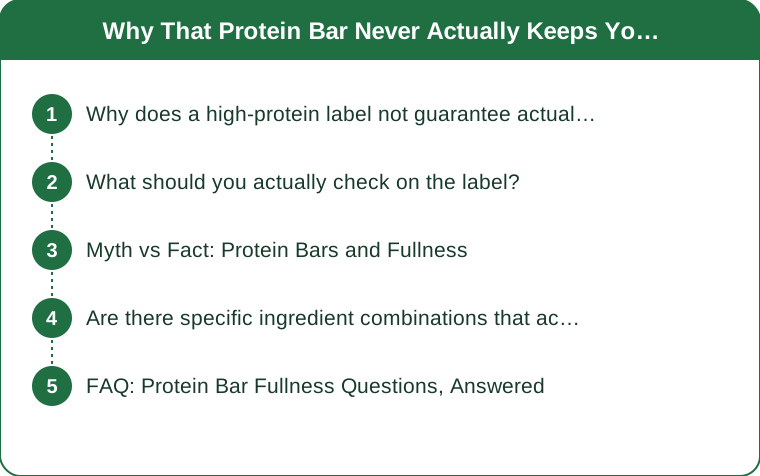
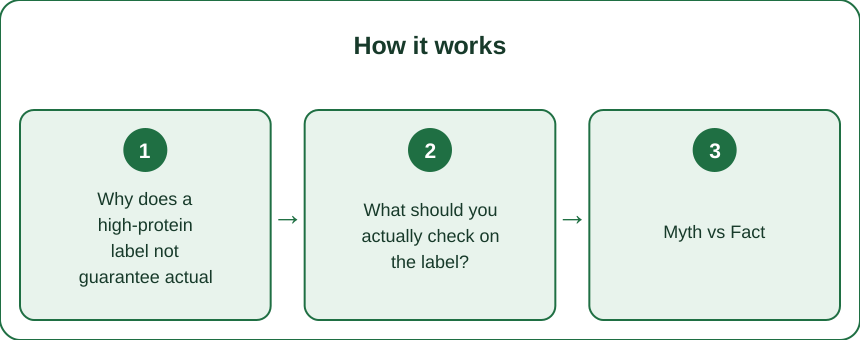
Why does a high-protein label not guarantee actual fullness?
Protein content alone doesn’t determine satiety — the type and amount of sugar, fiber, and fat in the same bar significantly affects how your blood sugar responds, and a bar loaded with sugar alcohols or fast-digesting syrups can cause a quick spike and crash that leaves you hungry again despite the protein number on the label. The marketing headline number doesn’t tell the full nutritional story.
Some bars also count collagen or low-quality protein blends toward their total protein number — these digest and satiate differently than whey, casein, or a well-balanced plant protein blend, even at the same gram count.
What should you actually check on the label?
Total sugar (including sugar alcohols), fiber, and fat, not just the protein number. A genuinely filling bar typically has 10-15g+ of protein, under 8g of actual sugar, and at least 3-5g of fiber, with a reasonable amount of fat to slow digestion. Bars that are high in “sugar alcohols” (maltitol, erythritol) marketed as low-sugar can still spike blood sugar for some people despite the lower listed sugar count.
Ingredient order matters too — if sugar, syrup, or a sugar alcohol appears in the first three ingredients, that’s a signal the bar is more dessert than a legitimately filling snack, regardless of the protein claim on the front.

Myth vs Fact: Protein Bars and Fullness
Myth: “More protein always means more filling.” Fact: protein source quality and the rest of the ingredient profile matter as much as the raw gram count for actual satiety.
Myth: “Low sugar always means blood-sugar-friendly.” Fact: sugar alcohols can still affect blood sugar and digestion for some people, even when the sugar count looks low.
Myth: “A protein bar is a meal replacement.” Fact: most bars, even well-formulated ones, lack the volume and micronutrient diversity of an actual meal — they’re better positioned as a snack or bridge, not a full substitute.
Are there specific ingredient combinations that actually work better?
Bars built around whey or a well-balanced plant protein blend, combined with nuts or nut butter for fat, and whole food fiber sources (like oats or chicory root in moderate amounts) tend to satisfy hunger longer than bars leaning heavily on syrups and sugar alcohols for texture and sweetness. Pairing a protein bar with a piece of fruit or a small handful of nuts, rather than eating it entirely alone, also improves how filling the overall snack feels.
If a specific brand consistently leaves you hungry, checking its ingredient list against a brand that consistently does satisfy you is often more informative than comparing protein grams alone.
FAQ: Protein Bar Fullness Questions, Answered
Is 20g of protein always better than 15g for fullness?
Not necessarily — protein source and the rest of the ingredient profile affect fullness as much as the raw number.
Do sugar alcohols cause digestive issues for everyone?
No, but a meaningful portion of people experience bloating or discomfort from sugar alcohols like maltitol, especially in larger amounts.
Can pairing a bar with another food actually improve fullness?
Yes — adding fruit, nuts, or another fiber source alongside a bar generally improves overall satiety more than the bar alone.
TL;DR:
- Protein grams alone don’t determine how filling a bar actually is
- Check total sugar (including sugar alcohols), fiber, and fat, not just protein
- Sugar or syrup near the top of the ingredient list signals a dessert-leaning bar
- Pairing a bar with fruit or nuts improves overall fullness
Next time you grab a bar, flip it over and check the full sugar and fiber numbers, not just the protein claim on the front — it explains a lot about why some bars satisfy and others don’t.
Keep Reading
This article is for general informational purposes only and is not medical advice. Always consult a qualified health professional for guidance specific to you.