The Protein-Plus-Fiber Rule That Makes Any Snack Actually Hold You Over
Quick Answer: Pairing a protein source with a fiber source slows digestion and blunts blood sugar spikes, which is why the combo keeps you full far longer than either one alone. Think apple plus peanut butter, not apple by itself, and not peanut butter by the spoonful.
You’ve tried the protein-only approach and still found yourself hungry an hour later. The missing half of the equation isn’t more protein — it’s fiber, and the two together do something neither one does on its own.

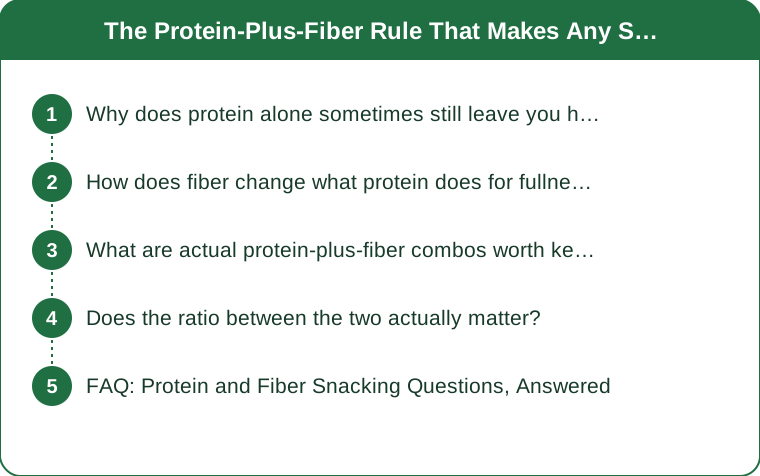
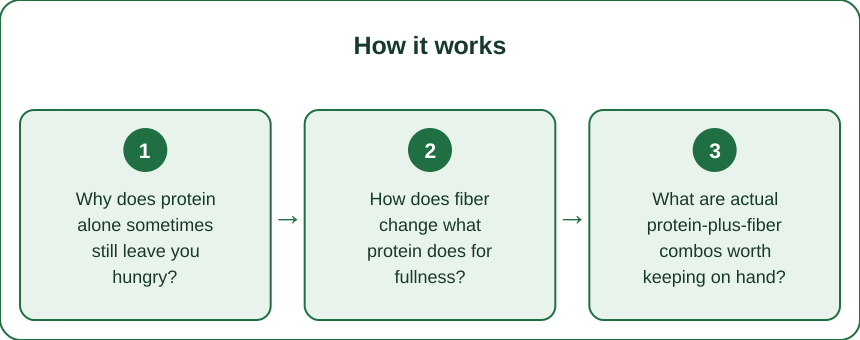
Why does protein alone sometimes still leave you hungry?
Protein slows digestion somewhat and supports satiety signals, but on its own — especially a fast-digesting source like a protein shake or a low-fiber bar — it can still clear your system faster than you’d expect. Without fiber alongside it, there’s less physical bulk moving through your digestive tract to sustain that full feeling.
This is a big part of why a protein bar with only 2-3 grams of fiber can feel less filling than a smaller snack that combines protein with a genuinely fibrous food. It also explains why a protein shake alone, however high the gram count, so often leaves people reaching for something else within the hour.
How does fiber change what protein does for fullness?
Fiber slows gastric emptying — the rate at which food leaves your stomach — which extends the time protein’s satiety signals stay active. It also feeds a slower, steadier blood sugar response instead of the spike-then-crash pattern that leaves you reaching for something else 45 minutes later.
The combination is genuinely more than the sum of its parts: protein plus fiber together produces a longer, steadier fullness window than either nutrient delivers alone. Soluble fiber specifically, the kind found in oats, chia seeds, and apples, forms a gel-like consistency in the digestive tract that slows things down even further than fiber in general.

What are actual protein-plus-fiber combos worth keeping on hand?
Apple slices with peanut or almond butter — fiber from the apple, protein and fat from the nut butter. Greek yogurt with berries and a sprinkle of chia seeds — protein from the yogurt, fiber from both the fruit and seeds. Hummus with raw vegetables — plant protein and fiber in one combo, no extra prep.
Whole grain crackers with cheese and a hard-boiled egg with a small side of baby carrots round out easy options that need almost no preparation and travel well in a bag or desk drawer.
Does the ratio between the two actually matter?
Roughly aiming for at least 5 grams of fiber alongside 10+ grams of protein is a reasonable target for a snack meant to genuinely hold you over between meals. You don’t need to calculate this precisely every time — once you get a feel for which combos hit that range, it becomes automatic.
A snack heavy in one and nearly absent in the other (a protein shake with zero fiber, or a fruit salad with zero protein) is where the ‘why am I hungry again already’ problem tends to show up.
FAQ: Protein and Fiber Snacking Questions, Answered
How much fiber should a filling snack actually have?
Aiming for around 5 grams of fiber paired with a solid protein source is a reasonable target for most people, though individual needs vary.
Are protein bars a good option if I check the fiber content?
Yes — many bars marketed heavily on protein are surprisingly low in fiber, so checking the label for both numbers, not just the protein count, is worth the extra ten seconds.
Can this combo help with blood sugar management generally?
The slower digestion from fiber paired with protein does tend to produce a gentler blood sugar response than a carb-heavy snack alone, though this is general information, not medical advice for a specific condition.
TL;DR:
- Protein alone doesn’t guarantee fullness — fiber is the missing half of the equation
- Fiber slows digestion and extends protein’s satiety effect
- Aim for roughly 5g fiber plus 10g+ protein per snack
- Easy combos: apple and nut butter, yogurt and berries, hummus and vegetables
Next time a snack doesn’t hold you, check both numbers on the label, not just the protein count. This is general information, not medical advice.
Keep Reading
This article is for general informational purposes only and is not medical advice. Always consult a qualified health professional for guidance specific to you.